
Setting up a dairy plant is a sequence of connected decisions: what you will make, how much, and which equipment will make it hygienically and efficiently. Getting the order right saves cost and rework later.
1. Define the product range and capacity
Start with the products (milk, cheese, ice cream, powders) and the daily volume you expect now and in the next few years. Capacity drives the size of tanks, heat exchangers and utilities.
2. Plan the process flow and layout
A typical flow runs from milk reception and storage, through standardisation and heat treatment, to filling or further processing. A clean layout keeps raw and finished areas separate and keeps pipe runs short.
3. Choose the core equipment
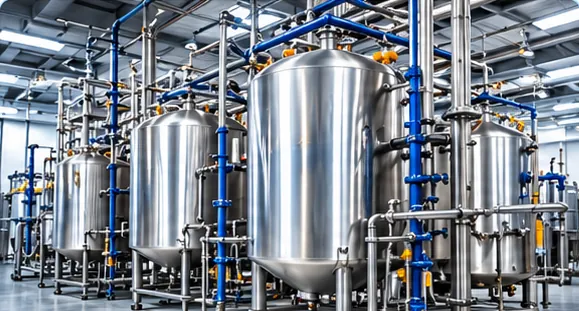
Common building blocks include pasteurizers, heat exchangers, storage tanks and CIP systems. For long shelf-life products, aseptic processing plants may be needed.
4. Design for hygiene and cleaning
Stainless steel construction, smooth welds and drainable pipework make cleaning reliable. A CIP system cleans the pipework and tanks without dismantling them.
5. Install, commission and hand over
Installation, testing and operator training are as important as the equipment itself. Working with a team that handles design through commissioning keeps responsibility in one place.
If you are planning a dairy project, talk to our team about your requirements.